

Onshore vs. Offshore vs. Nearshore: The Definitive 2026 Decision Framework for Founders & CTOs
Featured Article
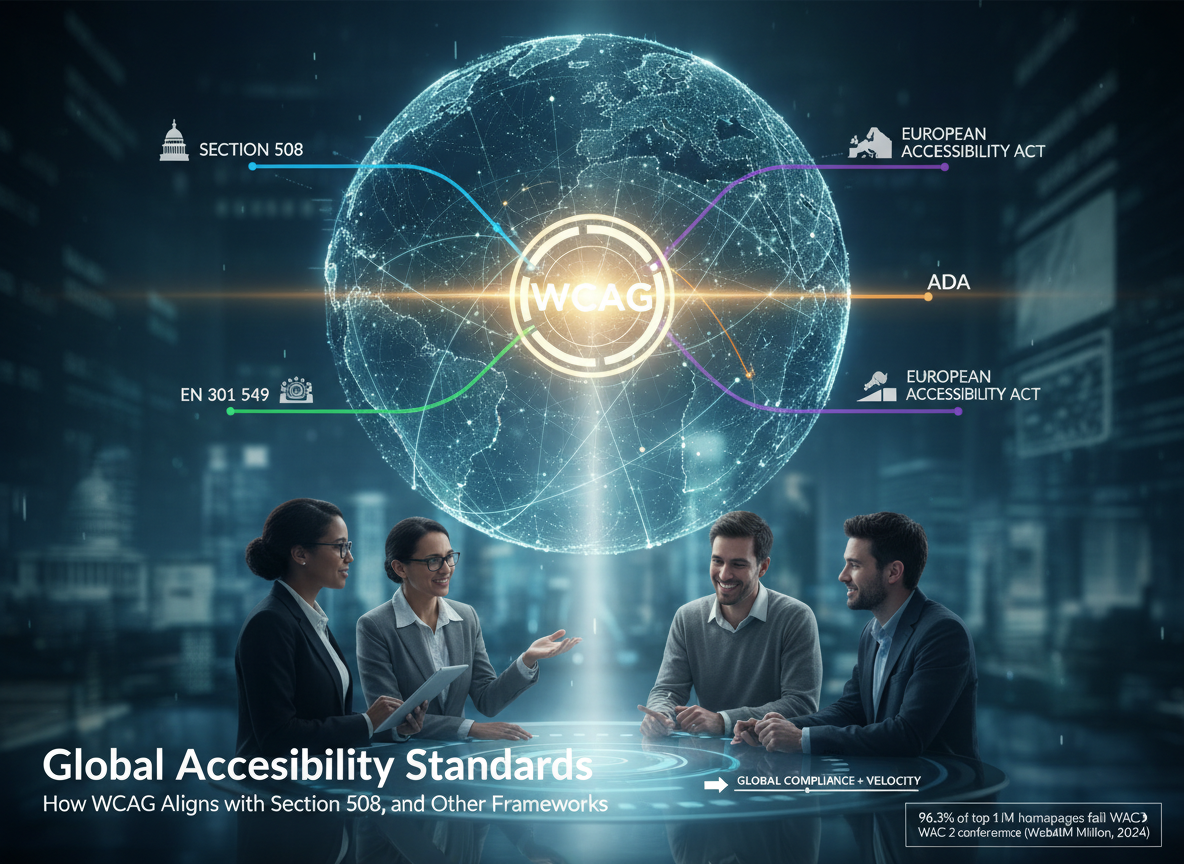
Global Accessibility Standards: How WCAG Aligns with Section 508, EN 301 549, and Other Frameworks
As a CTO or VP of Engineering, you're navigating a complex web of global accessibility standards—ADA, Section 508, EN 301 549, and the European Accessibility Act. How do you choose a single technical standard that unlocks compliance across multiple markets without derailing your development velocity?
The answer: build your strategy around the Web Content Accessibility Guidelines (WCAG).
With 96.3% of the world's top one million homepages failing basic WCAG 2 conformance (WebAIM Million, 2024), a proactive WCAG-first approach isn't just about compliance—it's a competitive advantage that turns fragmented regional requirements into a single, coherent engineering roadmap.
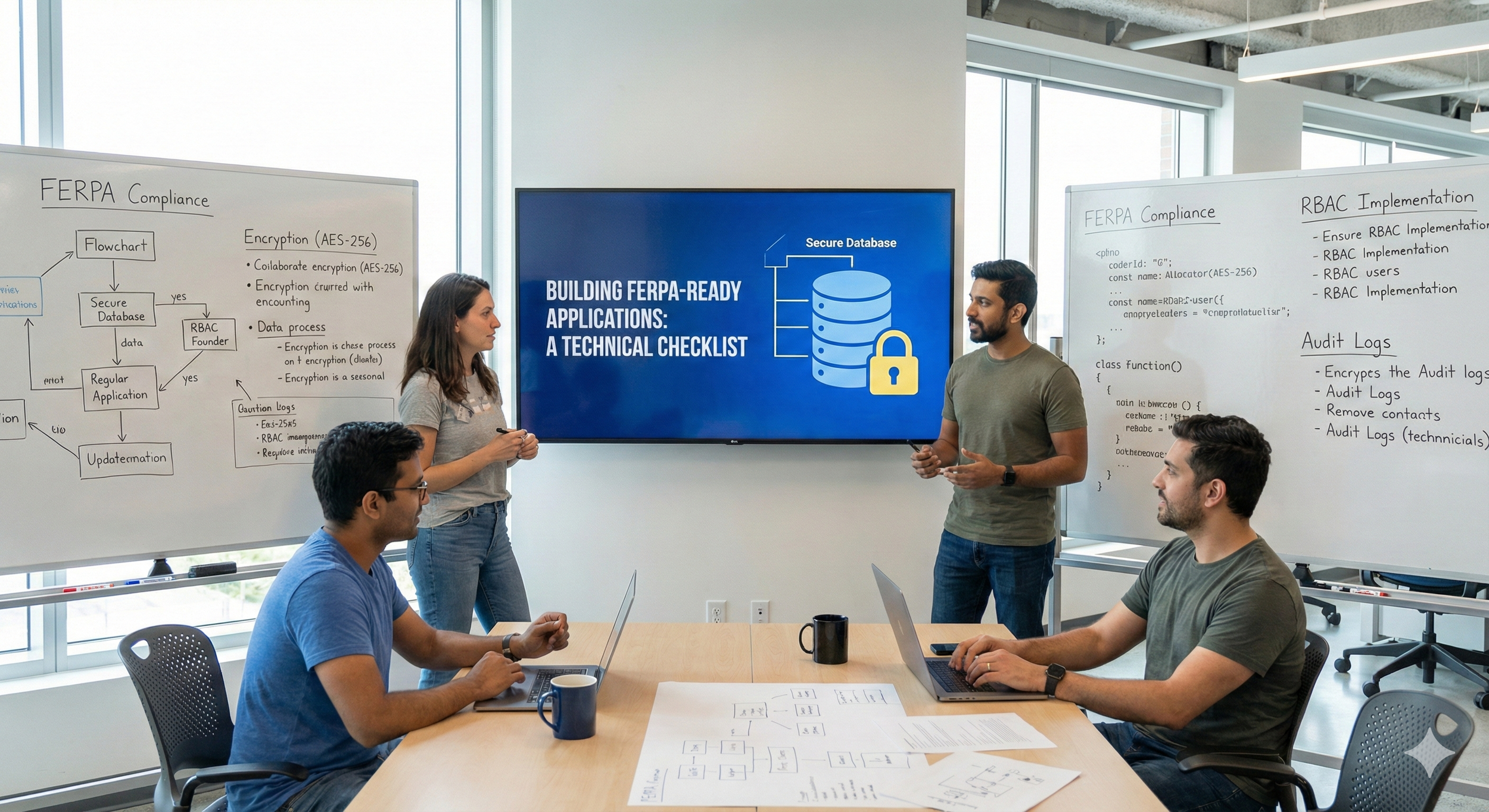
Building FERPA-Ready Applications: A Technical Checklist for Founders & Tech Leaders
As an EdTech founder or engineering leader, you operate under a dual mandate: innovate at the speed of light and build a product that schools, parents, and students can trust. Navigating the Family Educational Rights and Privacy Act (FERPA) can feel like a legal hurdle that slows you down. But what if compliance wasn't a burden, but a core feature?
Building a FERPA-compliant application is a declaration of your commitment to student privacy. It’s a competitive advantage that builds profound trust with your users and unblocks enterprise sales with school districts. This guide goes beyond dense legalese to provide an actionable engineering blueprint. We're translating legal requirements into application architecture, database design, and secure development practices. At Hireplicity, we believe privacy isn't an afterthought; it's the foundation of great educational technology.

Philippines Software Development Outsourcing Costs: 2026 Complete Pricing Guide
Philippines software development rates in 2026: Senior developers cost $35-$55/hour ($3,500-$5,200/month), mid-level $20-$35/hour, with total cost of ownership adding 22% for mandatory benefits (SSS, PhilHealth, 13th-month pay) plus 15-20% management overhead. The CREATE MORE Act offers 4-7 year tax holidays and 5% corporate tax rates for registered enterprises, while the stable PHP 59:USD exchange rate and 1.8% inflation maintain cost advantages 60-80% below US/UK rates despite rising demand for AI-augmented development talent.
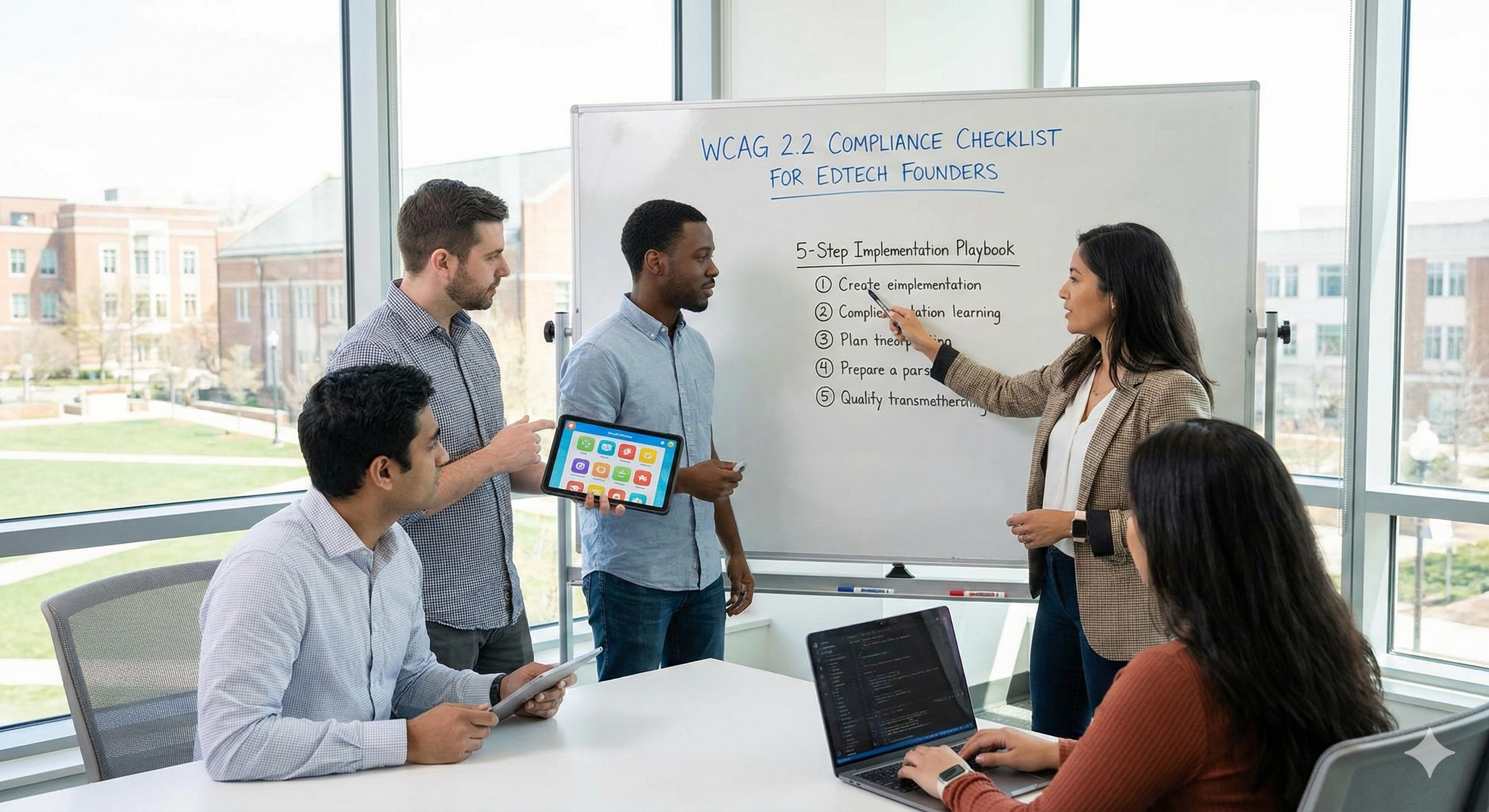
WCAG 2.2 Compliance Checklist for EdTech Founders: A 5-Step Implementation Playbook
Complete WCAG 2.2 compliance playbook for EdTech CTOs. Learn the 9 new success criteria, get implementation steps, and build accessible learning platforms.
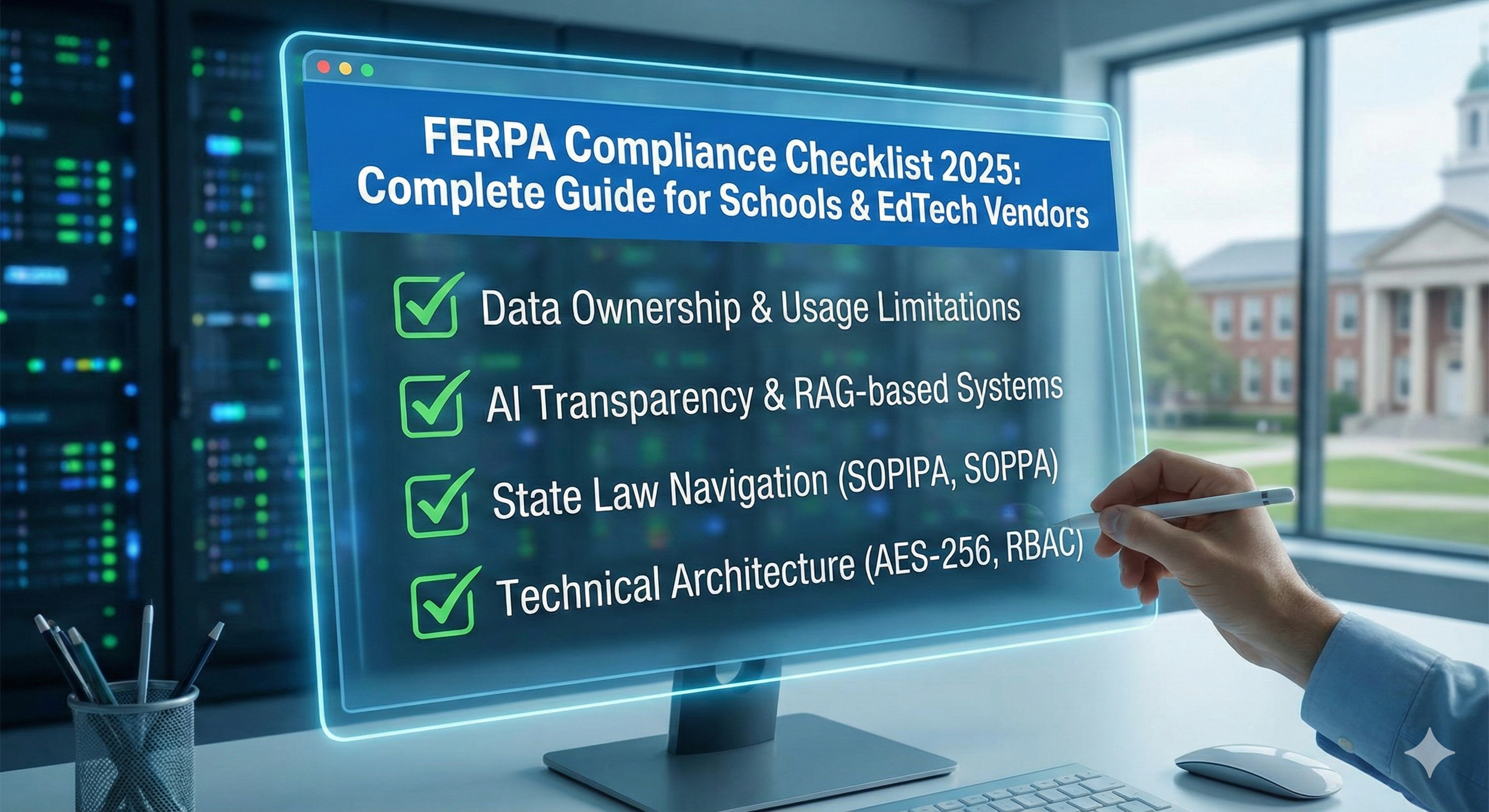
FERPA Compliance Checklist 2026: Complete Guide for Schools & EdTech Vendors
FERPA compliance in 2025 requires schools and EdTech vendors to implement strict contract clauses, including data ownership retention, usage limitations, and AI transparency requirements, while navigating state laws like California's SOPIPA and Illinois' SOPPA that mandate opt-in consent and breach notification within 72 hours. Technical architecture must include AES-256 encryption, role-based access control, and RAG-based AI systems to prevent student PII from entering permanent training datasets.

AI-Native EdTech Modernization: The 2026 Replatforming Guide
AI-native modernization transforms EdTech platforms from AI-bolted-on features to systems where artificial intelligence orchestrates the entire learning experience. Unlike legacy retrofits that add chatbots or recommendation engines via APIs, AI-native architectures use orchestrator-worker patterns where intelligent agents coordinate assessment, personalization, and content delivery from the foundation up. The strategic framework has evolved from "Build vs Buy" to include "Boost" using Retrieval Augmented Generation (RAG) to enhance vendor models with proprietary institutional data, offering differentiation without the 12-24 month build timeline or $1.5M+ investment required for custom model development.

Offshore Software Development Australia: The Complete 2026 Guide for Founders and CTOs
The Australian Computer Society's Digital Pulse 2024 report forecasts a need for approximately 52,000 additional ICT workers annually through 2030 to meet growing industry demand. For CTOs in Sydney, Melbourne, and Brisbane, this isn't news—it's your daily reality.
You can't hire the developers you need because they either don't exist in sufficient numbers or cost prohibitively.

The 2026 EdTech Compliance Roadmap: SOC 2, Student Privacy, and AI Regulation
EdTech vendors selling to K-12 and higher education institutions in 2026 must navigate three compliance layers: SOC 2 Type II audits for operational security proof, state-specific "super laws" like Illinois SOPPA and NY Education Law 2-d (requiring data privacy agreements and NIST alignment), and new AI governance mandates across Indiana, Kentucky, and Rhode Island that introduce universal opt-out mechanisms and neural data protections. The strategic advantage lies in "mapping once, complying many"—SOC 2 Security criteria overlap 40-50% with state requirements, reducing duplicate compliance work when paired with automation platforms like Drata or Vanta.
Shift-Left Accessibility Implementation Playbook for EdTech CTOs
Embedding accessibility testing throughout your SDLC (not just at the end) reduces remediation costs by 75% and accelerates fixes by 3x. With Title II compliance deadlines approaching (April 2026-2027), EdTech CTOs must integrate WCAG 2.1 Level AA checks from design through deployment.
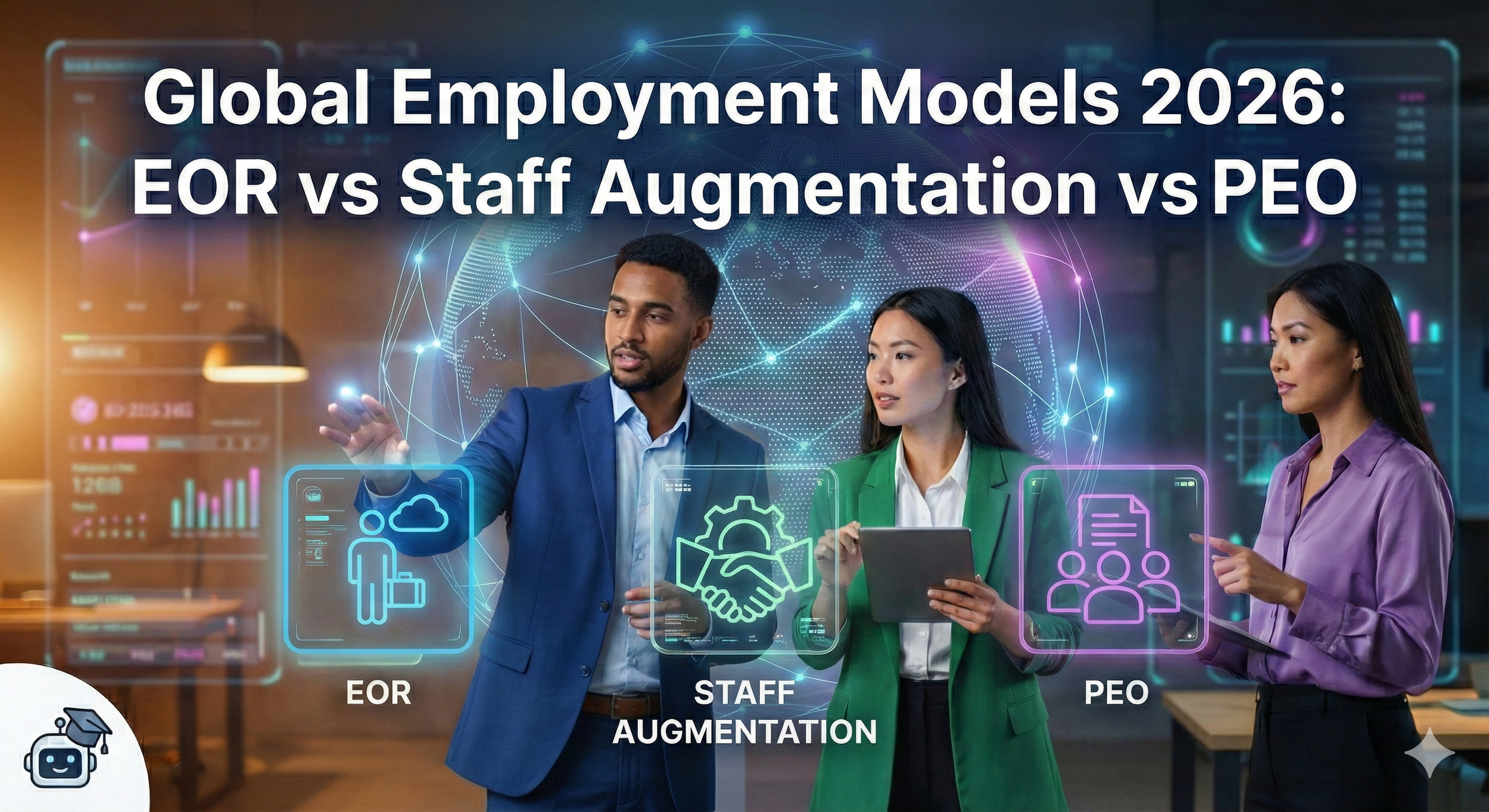
Global Employment Models 2026: EOR vs Staff Augmentation vs PEO
The global Employer of Record market is surging toward $7-8 billion by 2026, yet most EdTech companies struggle to choose between EOR, Staff Augmentation, and PEO models for international expansion. Select the wrong employment framework and you'll face permanent establishment liability, worker misclassification penalties, or unsustainable cost structures. This guide examines the true economics, compliance risks, and operational trade-offs of each model—revealing when EORs provide genuine risk mitigation versus expensive false security, why staff augmentation creates hidden employment liability, and at what team size entity establishment becomes more cost-effective than outsourcing employment administration.