

Onshore vs. Offshore vs. Nearshore: The Definitive 2026 Decision Framework for Founders & CTOs
Featured Article

The 2026 Technical Blueprint for Code-Level FERPA Compliance in EdTech
K-12 EdTech vendors face disqualification from district procurement in 2026 if they cannot demonstrate code-level compliance controls — self-attestation and policy documents no longer pass. The six architectural requirements are: RAG-based AI pipelines that keep student PII out of LLM weights, Attribute-Based Access Control (ABAC) for legitimate educational interest enforcement, AES-256 encryption with TLS 1.3 and true cascading hard deletes, LTI 1.3 for integration-layer data minimization, and SOC 2 Type II audits mapped to NIST SP 800-53 control families. Educational institutions currently face 2,507 cyberattack attempts per week, and 1.8 million students have been breached since 2020 — making these controls a market-entry requirement, not a competitive differentiator.

What Is an LMS? A Plain-English Guide for EdTech Founders and Startups (2026)
A learning management system (LMS) is software that delivers, tracks, and manages educational or training content for learners at scale from a single platform. The global LMS market is projected to reach $37.09 billion in 2026, growing at an 18.1% CAGR — fueled by AI personalization features and enterprise compliance demands (Business Research Company, 2026). Most production EdTech stacks run SCORM for legacy content portability, cmi5 for new builds, and LTI 1.3 for third-party tool integration — rarely just one standard.
Custom LMS Development: Architecture Decisions That Determine Scale and Success
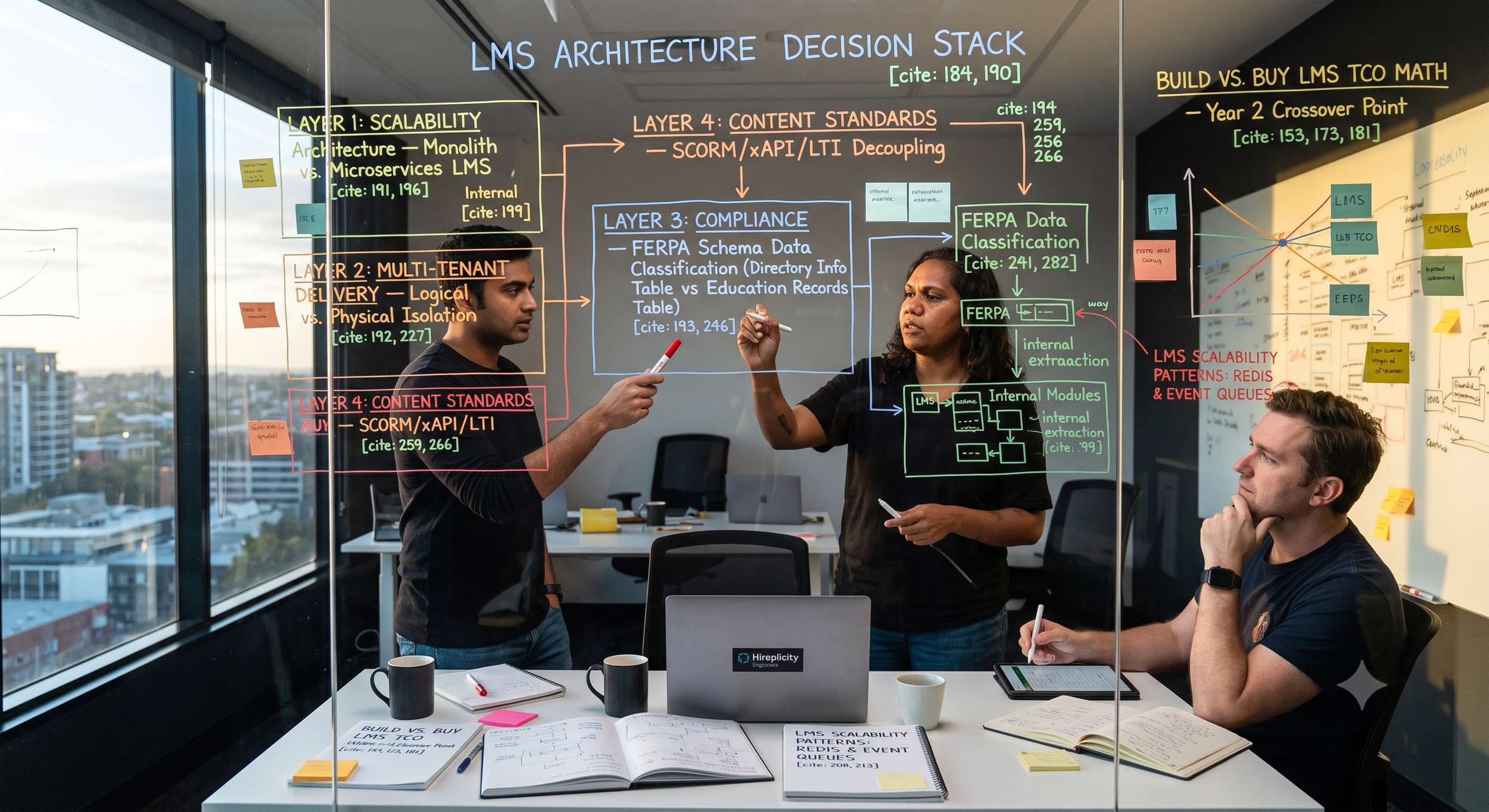
Custom LMS development succeeds or fails based on three architectural decisions made before the first sprint: whether to use monolithic or microservices architecture, how to isolate tenant data in multi-client environments, and whether compliance is built into the database schema or bolted on as an application feature. The global LMS market is projected to grow from $9.98 billion in 2023 to $63.12 billion by 2033 (Precedence Research, 2024), creating both enormous opportunity and fierce competition. This guide gives engineering leaders and technical founders a concrete framework for making each of those decisions correctly.

The Essential Eight Cybersecurity Framework for Software: Australia's Baseline Every Dev Team Must Know
The ACSC Essential Eight is a set of eight prioritised cybersecurity mitigation strategies developed by the Australian Signals Directorate (ASD), mandatory for non-corporate Commonwealth entities under the PSPF, and it is also commonly used as a security baseline in government and regulated supply-chain contexts. The framework was developed in response to common enterprise attack paths, many of which historically appeared in Windows and Microsoft Office environments. This guide maps all eight Essential Eight controls to their DevSecOps equivalents, with a maturity roadmap Australian software teams can act on without grinding development velocity to a halt.

APP 8 Compliance for EdTech SaaS: What Australian Schools and Vendors Need to Know
Australian Privacy Principle 8 (APP 8) makes your organization legally responsible for how overseas vendors handle student data — even if you have a signed contract. The 2024 Privacy Act reforms raised corporate penalties to $50 million, and the May 2026 Canvas LMS breach proved that static vendor agreements offer zero protection against supply-chain attacks. EdTech platforms operating in Australia must now treat APP 8 compliance as a continuous engineering requirement, not a checkbox on a procurement form.
How to Hire AI-Augmented Offshore Developers: Choosing the Right Engagement Model
Hiring AI-augmented offshore developers in the Philippines in 2026 delivers 40–70% cost savings versus US hiring, with AI-assisted teams shipping 35–55% faster than traditional offshore models. A fully-loaded senior developer costs $6,000–$7,500/month — including statutory benefits, AI tooling, and management overhead — compared to $180,000–$210,000/year for a US equivalent. Your engagement model — staff augmentation, Employer of Record (EOR), or Build-Operate-Transfer (BOT) — determines your compliance exposure, IP ownership, and tooling flexibility, so model selection should come before rate negotiation.
AI-Augmented EdTech Development: What It Actually Means, What It Changes, and What to Expect From Your Development Partner in 2026
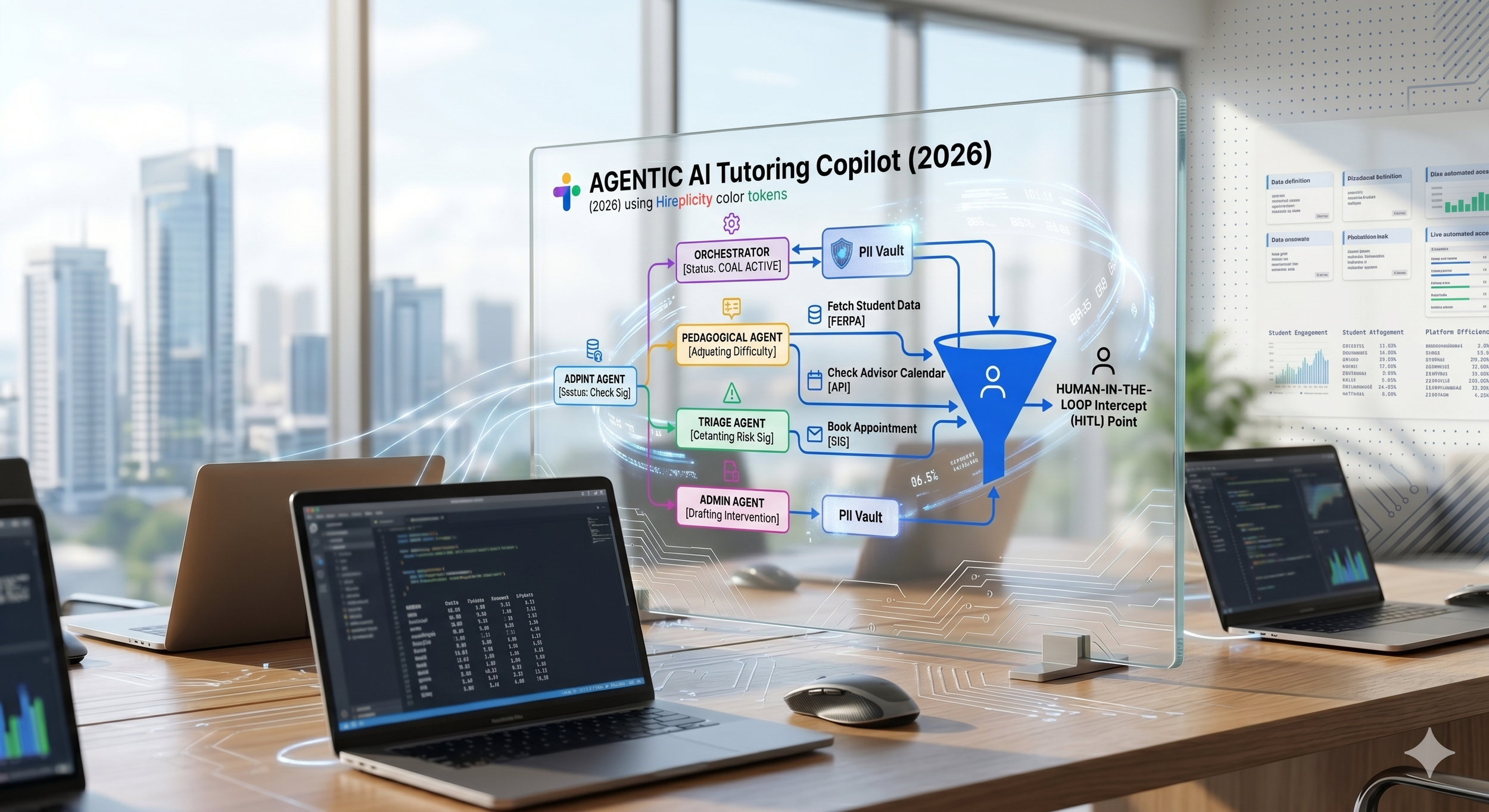
The global AI in education market is projected to grow from $11.4 billion in 2026 to $57.2 billion by 2033, at a 25.9% CAGR (Grand View Research, 2026). Agentic AI in education—autonomous systems that plan and execute multi-step workflows across tools—already handles 81.8% of student interaction volume in higher education deployments (Druid AI Benchmark, 2026). Unlike reactive chatbots, these systems require a fundamentally different software architecture to build safely in a regulated environment like education.
The EdTech Software Development Guide for 2026: Architecture, Compliance & Real Costs
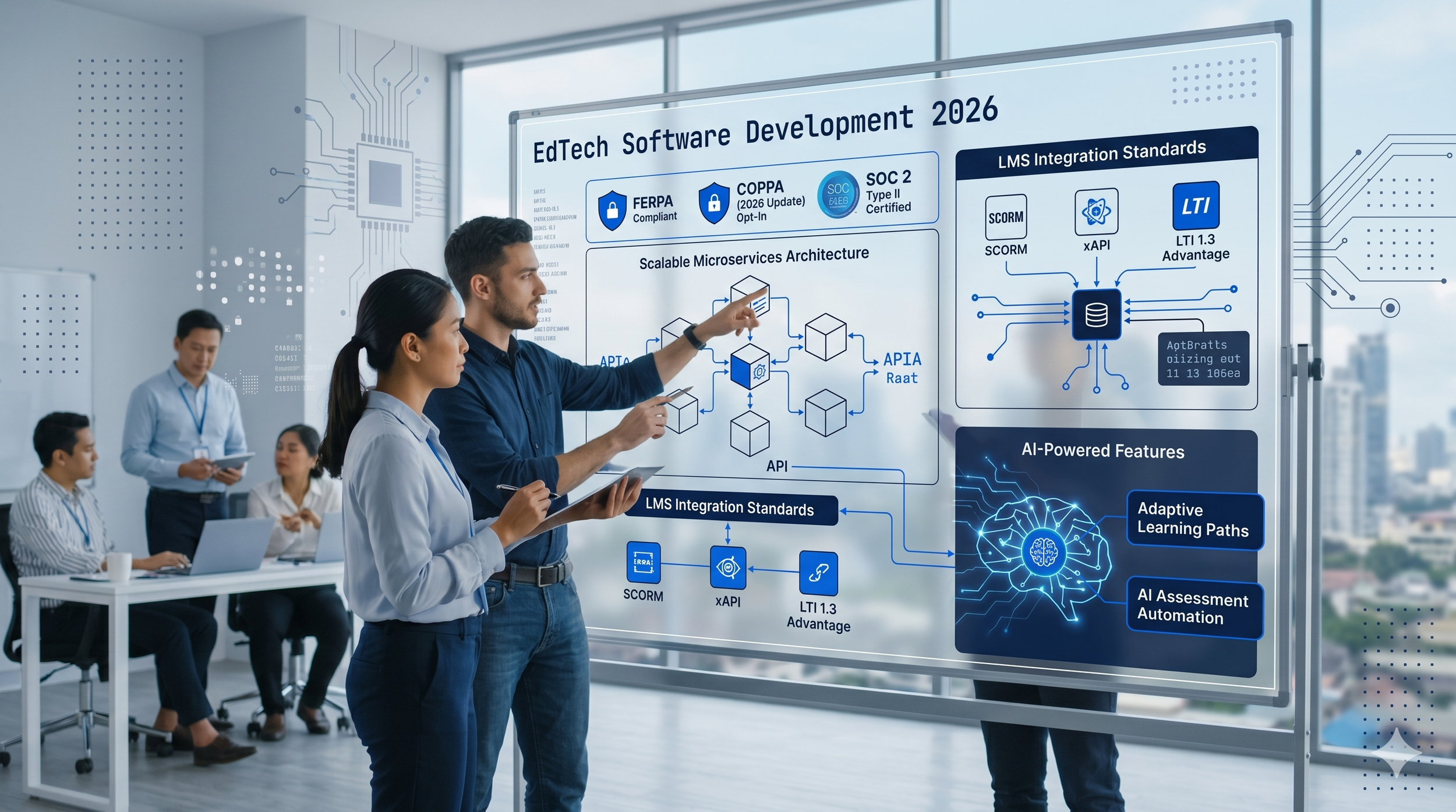
Building EdTech software in 2026 requires three non-negotiable layers: scalable educational software architecture (microservices for platforms serving 10,000+ users), FERPA/COPPA/SOC 2 compliance engineered from sprint one — not bolted on after — and LMS integrations using xAPI or LTI 1.3 Advantage. The global EdTech market will reach $236 billion in 2026 at an 18.3% CAGR (Research and Markets, 2026), and 96% of EdTech apps currently share student data with third parties without realizing they're violating federal law (FBI/K12 SIX Study). Educational app development costs run from $20,000 for a basic MVP to $300,000+ for enterprise platforms with AI personalization and multi-tenant architecture.
EdTech Compliance: The Founder's Guide to Privacy, Security, and Accessibility (2026)
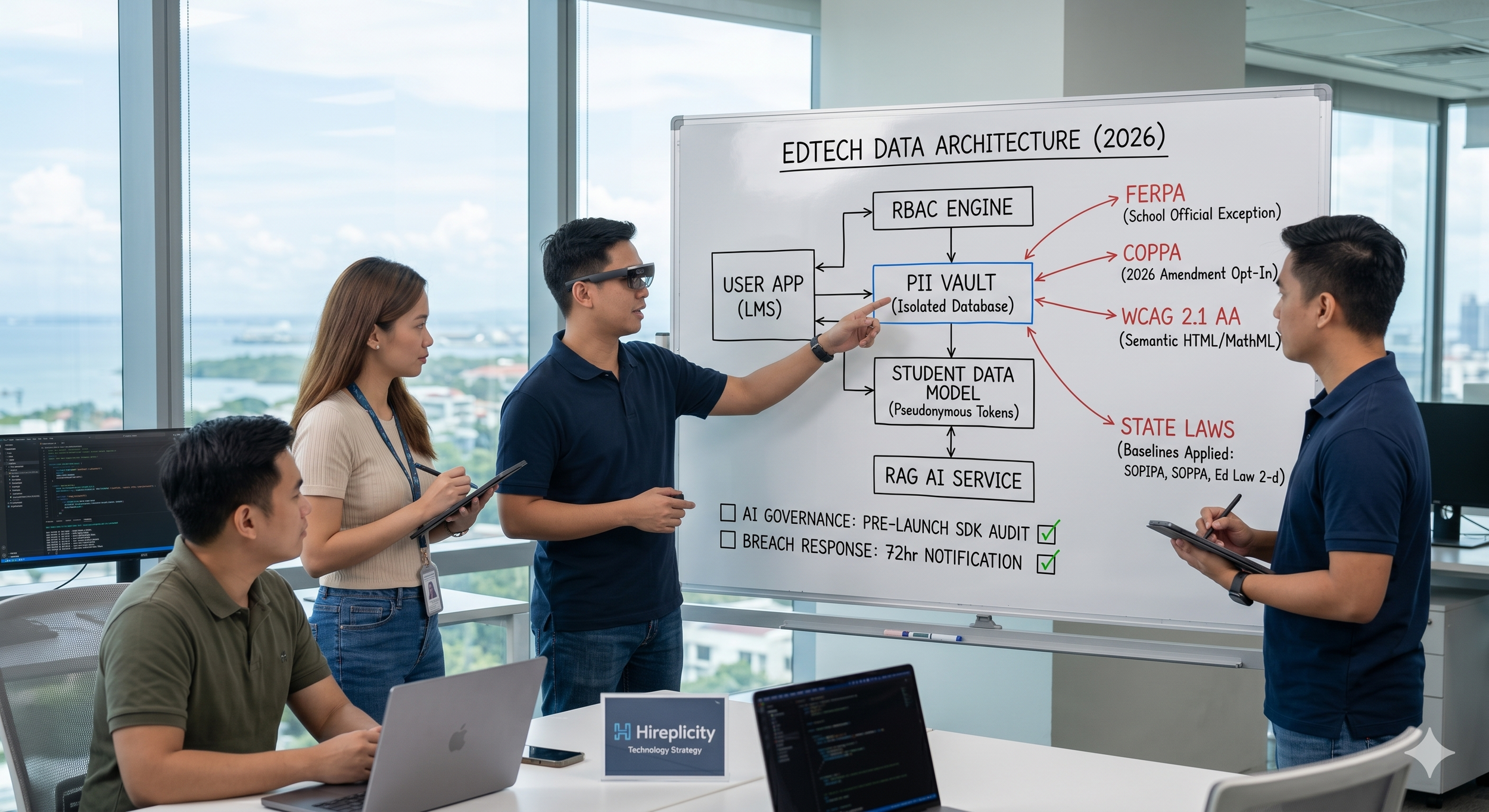
EdTech compliance in 2026 requires simultaneous conformance with FERPA's "School Official Exception," COPPA's revised opt-in consent model (effective April 22, 2026), and ADA Title II's WCAG 2.1 AA mandate—each enforced through separate legal mechanisms. State laws in California (SOPIPA), Illinois (SOPPA), and New York (Ed Law 2-d) extend federal floors with stricter contractual, deletion, and breach-notification requirements that bind vendors regardless of where they are headquartered. A SOC 2 Type II certification validates security controls but does not satisfy FERPA, COPPA, or WCAG obligations on its own. EdTech platforms that treat compliance as documentation rather than architecture are the ones that get disqualified at procurement.

Software Development Outsourcing Philippines 2026: Costs, AI & Choosing the Right Model
Outsourcing software development to the Philippines in 2026 delivers 40–70% cost savings versus US hiring — and AI-augmented teams have made those teams meaningfully faster, not just cheaper. A fully-loaded senior developer costs $6,000–$7,500/month including AI tooling, statutory benefits, and management overhead, compared to $180,000–$210,000/year for a US equivalent. But the model you use to hire — staff augmentation, EOR, or GCC — shapes your compliance risk and operational flexibility as much as the rate itself.